
 Tiếng Việt
Golden camellia is a fairly demanding plant — it only thrives under specific climate, soil, and elevation conditions. So where exactly is KINKA’s Gia Lai golden camellia growing region, and what makes this location suited to cultivating this rare medicinal plant? This article walks through how the growing region came to be, then each specific natural factor.
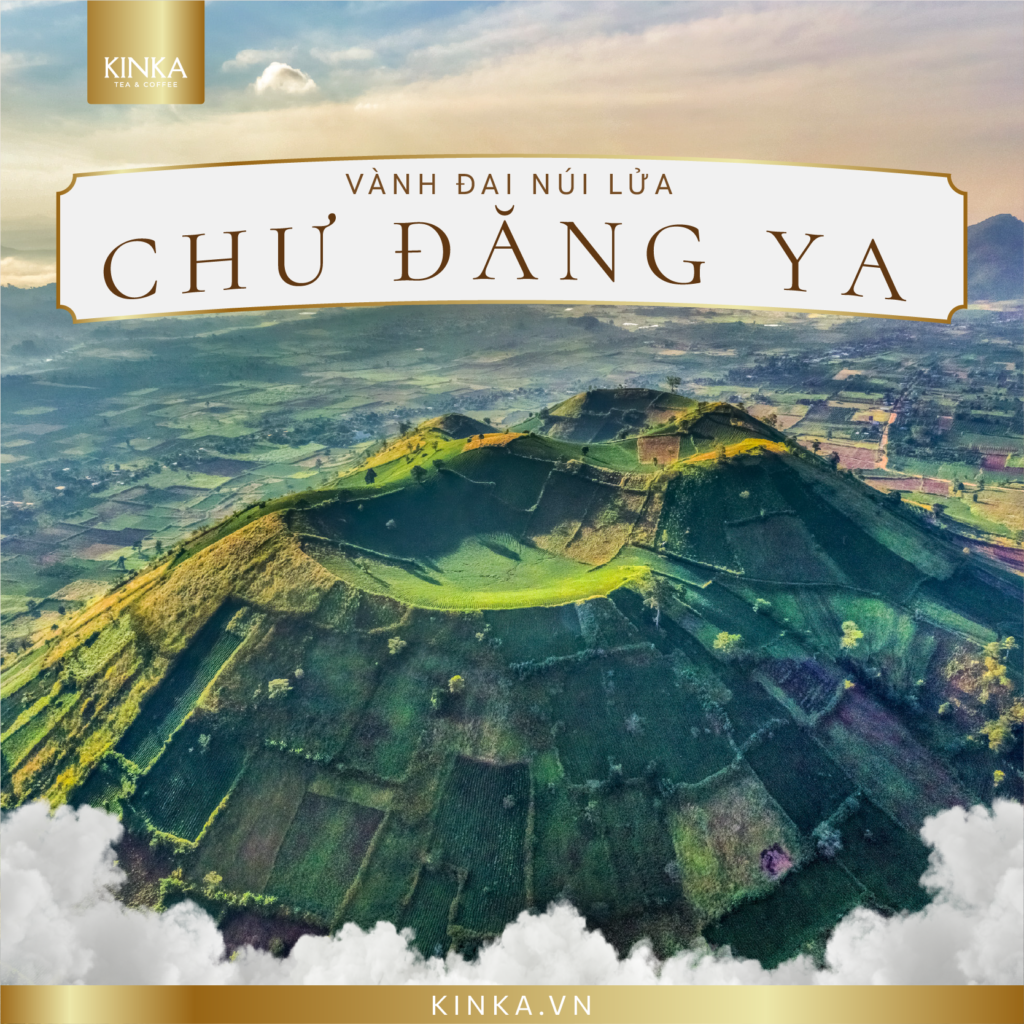
Location: Chu Pah, Next to the Chu Dang Ya Volcano and Bien Ho
The dedicated golden camellia growing region in Gia Lai — developed by Truong Duong Group and Tam Phuc Minh, the foundation for products later sold under the KINKA brand — was established in 2017, spanning more than 13 hectares, in Chu Pah district, Gia Lai province — right beside the extinct Chu Dang Ya volcano and Bien Ho (Sea Lake, also called T’Nung Lake), two of the Central Highlands’ best-known tourist destinations. The growing region was established right as Gia Lai province set policy to develop the Chu Dang Ya area into a medicinal-herb region. (See the details of this policy in: “Why Was Chu Dang Ya, Gia Lai Chosen to Develop a Medicinal Herb Region?“)
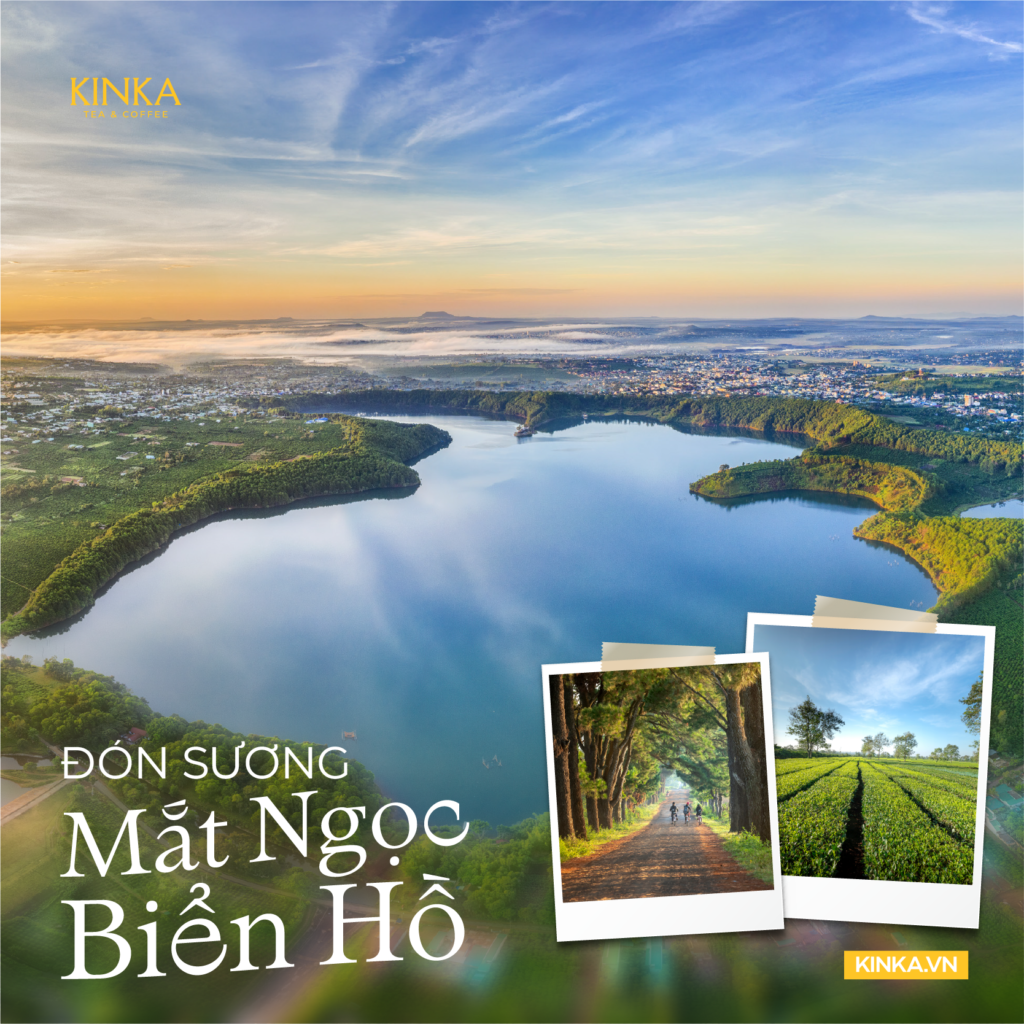
Bien Ho formed within the crater of a volcano that has been dormant for millions of years; its water stays clear year-round and its level barely changes even through long dry seasons — a trait that has earned it the local nickname “the bottomless lake,” though this is a folk expression rather than an official depth measurement.
The tea-growing area next to Bien Ho (known as Bien Ho Che, or “Sea Lake Tea Hills,” in Pleiku) also carries a notable historical trace from the French colonial era, showing that this part of Gia Lai already had a long tradition of tea cultivation and processing well before Truong Duong Group and Tam Phuc Minh chose this location to develop a dedicated golden camellia growing region, laying the groundwork for golden camellia products later sold under the KINKA brand. (Read the full history in: “The History of the French-Era Bien Ho Tea Plantation — A Century-Old Legacy Beside KINKA’s Golden Camellia Growing Region“)
Why Gia Lai’s Climate and Soil Suit Agriculture and Forestry
Beyond KINKA’s own growing region, Gia Lai’s natural conditions in general offer several advantages for agriculture and forestry:
- Soil: loose, fertile volcanic basalt plateau soil, with traces of more than 30 extinct volcanic craters across the province — evidence of the area’s volcanic-soil value.
- Land area and forest: Gia Lai is Vietnam’s second-largest province by area, and has the largest forest area in the Central Highlands region.
- Climate: at 600-800m elevation, Gia Lai has a cool climate with two distinct seasons (rainy and dry), average temperatures around 22-25°C (72-77°F), and humidity levels suited to plant growth.
- Water source: substantial, good-quality groundwater reserves — an important condition for sustainable long-term cultivation.
For KINKA’s growing region specifically, mineral-rich red basalt soil combined with 600-800m elevation gives golden camellia plants enough nutrients to develop their root systems and accumulate nutrients in the flower buds, while providing the year-round cool climate this cold-loving plant needs. Irrigation water for the growing region comes from groundwater flowing out of the adjacent primary forest, rather than depending on surface water sources that are more prone to contamination.
The “Forest First, Tea Second” Model
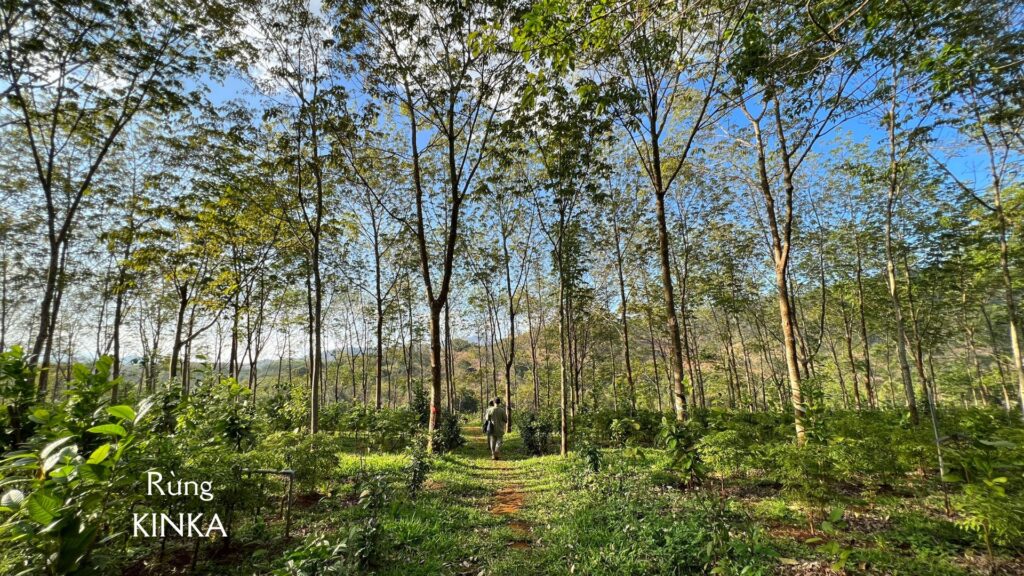
The biggest difference in this growing region’s cultivation approach is the “forest first, tea second” philosophy: rather than cultivating on cleared land, the project team first planted native timber species to create a shade canopy, then introduced golden camellia to grow beneath it as an understory crop.
The upper tree canopy regulates the growing region’s microclimate: reducing harsh direct sunlight during the dry season while reducing excess humidity buildup during the rainy season — creating a more stable environment suited to golden camellia’s preference for shade and moderate humidity, rather than leaving the plant exposed to direct, unpredictable weather.
Chemical-Free Cultivation, Self-Sufficient Organic Fertilizer
The entire growing region uses no chemical fertilizers or pesticides. Instead, the project team actively raises cattle and composts manure to produce organic fertilizer for the growing region — ensuring a “clean” fertilizer source while maintaining self-sufficient supply rather than depending entirely on commercial fertilizer.
This is a closed-loop, low-intervention cultivation model: from the forest canopy above, to clean groundwater from the adjacent primary forest, to a self-sufficient organic fertilizer source — all factors that contributed to this golden camellia growing region earning 4-star OCOP certification in 2023.
(Learn more about this certification in: “Does Gia Lai Golden Camellia Tea Have OCOP Certification?“)
Frequently Asked Questions
How large is the golden camellia growing region in Gia Lai? More than 13 hectares, bordered by forest on three sides, with groundwater flowing from adjacent primary forest.
Why did Truong Duong Group and Tam Phuc Minh choose Gia Lai over the established growing regions in northern Vietnam? Gia Lai offers favorable natural conditions for agriculture and forestry in general (basalt soil, cool climate, abundant groundwater), and Gia Lai province also had policy in place to develop a medicinal-herb region around Chu Dang Ya right around the time KINKA’s growing region was being built.
Is Bien Ho really “bottomless”? This is a familiar local folk expression, based on the lake’s stable water level year-round, even through long dry seasons — not an official depth measurement.
How old is the tea-growing area next to Bien Ho? Dating to around the 1920s, during the French colonial era. Read the full history in: The History of the French-Era Bien Ho Tea Plantation
Conclusion
The Gia Lai golden camellia growing region — developed by Truong Duong Group and Tam Phuc Minh, the foundation for products sold under the KINKA brand — brings together several favorable natural factors: proximity to the Chu Dang Ya volcano and Bien Ho, 600-800m elevation, mineral-rich red basalt soil, and clean groundwater — combined with the deliberate “forest first, tea second” cultivation model and self-sufficient organic fertilizer production. This is the foundation behind the quality and distinctive story of Gia Lai golden camellia tea, compared to other growing regions in Vietnam.
Continue reading: Gia Lai Golden Camellia Tea (KINKA): The Complete Guide to Benefits, Brewing & Where to Buy | Does Gia Lai Golden Camellia Tea Have OCOP Certification? | Why Was Chu Dang Ya, Gia Lai Chosen to Develop a Medicinal Herb Region? | The History of the French-Era Bien Ho Tea Plantation | Gia Lai vs. Ba Che & Ninh Binh: How Vietnam’s Golden Camellia Growing Regions Compare
KINKA – Experience Every Drop of Happiness (A brand of Truong Duong Group)
- Website: truongduonggroup.com/en
- Vietnamese storefront: kinka.vn
- Hotline: +84 911 169 318
- TikTok Shop: @kinka.vn
- Shopee – KINKA Tea Shop: shopee.vn/tiemtrakinka


