
 Tiếng Việt
Vietnam has a handful of well-known golden camellia growing regions. The most established are Ba Che, in the northeastern mountains of Quang Ninh province, and the area around Cuc Phuong National Park in Ninh Binh — both in northern Vietnam. More recently, a third region has emerged in Gia Lai, on the Central Highlands plateau, where Truong Duong Group and Tam Phuc Minh have developed a dedicated growing region since 2017, producing tea sold under the KINKA brand. Each region has its own character shaped by soil, climate, and cultivation method — all of which affect the tea’s quality and flavor. Here’s how they compare.
Quick Comparison: 3 Golden Camellia Growing Regions
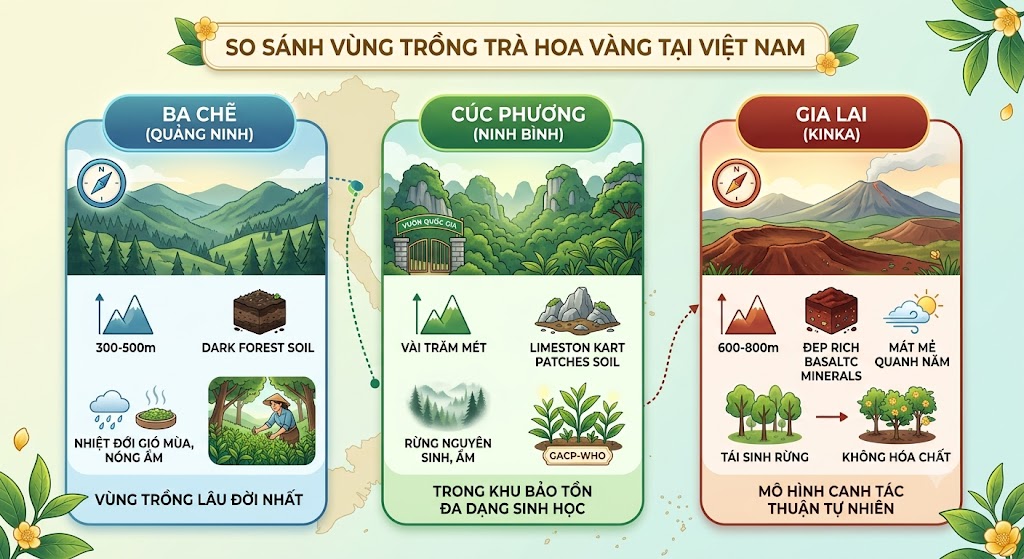
| Criteria | Ba Che (Quang Ninh) | Cuc Phuong (Ninh Binh) | Gia Lai (KINKA) |
|---|---|---|---|
| Location | Mountainous district, northeastern Quang Ninh | Cuc Phuong National Park, Ninh Binh | Extinct volcano Chu Dang Ya & Bien Ho (Sea Lake) area, Gia Lai |
| Average elevation | Roughly 300-500m (1,000-1,600 ft) above sea level | Limestone karst terrain, averaging a few hundred meters | 600-800m (2,000-2,600 ft) above sea level |
| Soil | Forest soil on hilly, mountainous terrain | Soil on limestone (karst) bedrock | Mineral-rich red basalt soil |
| Climate | Tropical monsoon, hot and humid, heavy rainfall | Humid tropical, primary forest | Cool year-round, characteristic highland-plateau climate |
| Cultivation model | Mostly grows wild under forest canopy, with cooperatives now propagating and expanding cultivation | Conserved within a national park; some organizations propagate it under GACP-WHO good-practice standards | Forest replanted first, then golden camellia introduced to grow within the regenerated forest canopy; no chemical inputs |
| Notable trait | Vietnam’s earliest and most widely known growing region, tied to a long-running local brand | Located within one of Vietnam’s richest biodiversity conservation areas | Newer Central Highlands region built around a natural, low-intervention growing model and freeze-drying processing |
Note: This comparison table is compiled from publicly available sources on each region, for general reference — it is not official measured data from each organization.
Ba Che (Quang Ninh) — Vietnam’s Oldest, Most Widely Known Growing Region
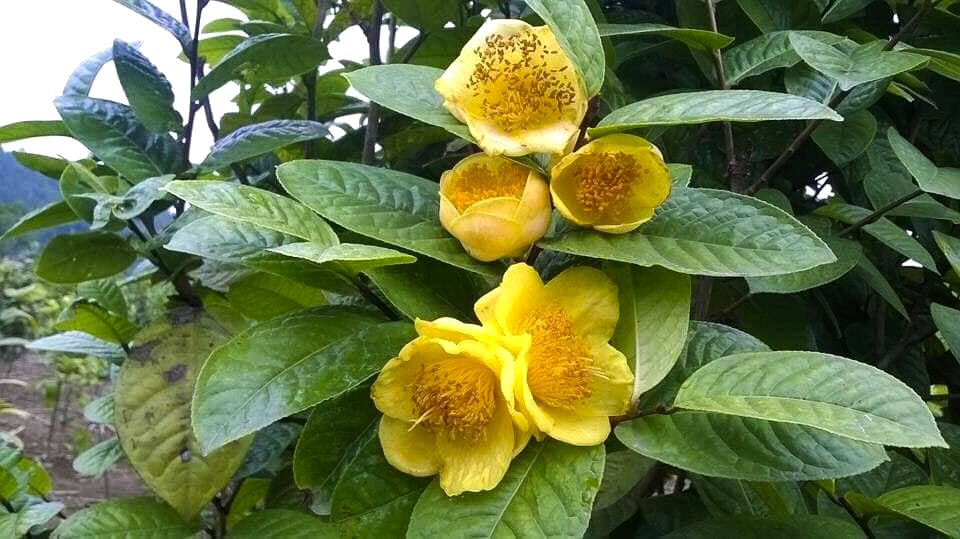
Ba Che is a mountainous district in northeastern Quang Ninh province, where over 91% of the land is forest, home to rich plant life that includes roughly 30 economically valuable medicinal species — golden camellia among them. Ba Che’s golden camellia mostly grows wild under the canopy of larger trees at the forest edge, though in recent years local residents and cooperatives have been propagating it and expanding cultivated area to meet growing demand. This is also Vietnam’s earliest and most widely recognized golden camellia growing region, closely tied to Ba Che’s story as a district that used the plant to help lift local livelihoods.
Cuc Phuong (Ninh Binh) — Inside One of Vietnam’s Richest Biodiversity Reserves
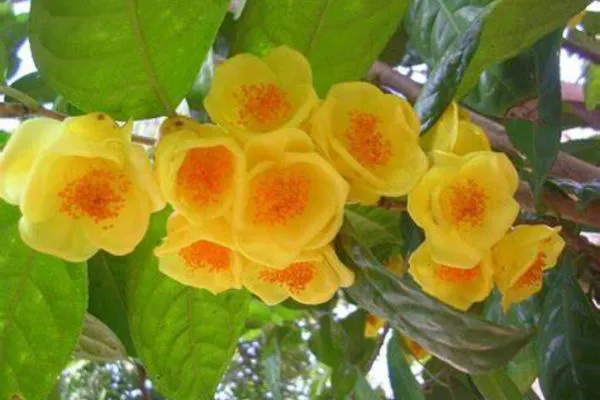
Golden camellia from Cuc Phuong is tied to Cuc Phuong National Park — one of Vietnam’s oldest and most biodiverse conservation areas, characterized by limestone karst terrain and humid tropical primary forest. It’s considered one of the valuable medicinal species among the more than 2,000 higher plant species recorded within the park. Some organizations are now propagating and developing golden camellia growing areas here under Good Agricultural and Collection Practices (GACP-WHO) standards.
Gia Lai (KINKA) — A New Central Highlands Region, Defined by Its Cultivation Model
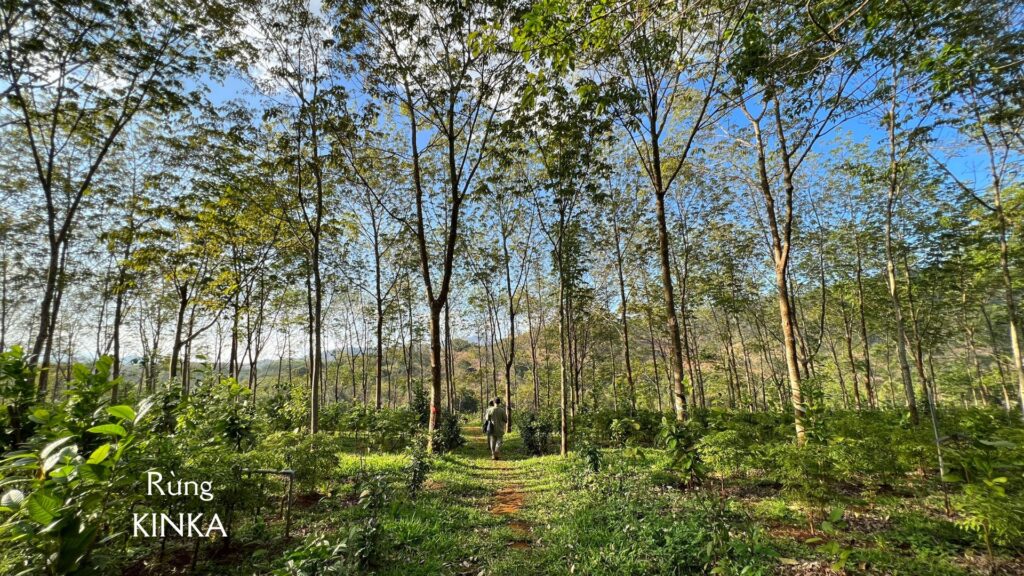
Unlike Ba Che and Cuc Phuong — regions where golden camellia has grown naturally for a long time in northern Vietnam — the Gia Lai growing region (developed by Truong Duong Group and Tam Phuc Minh, with tea sold under the KINKA brand) is a deliberately built project dating back to 2017, located around the extinct Chu Dang Ya volcano and the Bien Ho (Sea Lake) area, at 600-800m elevation on the Central Highlands’ characteristic mineral-rich red basalt soil.
The biggest difference lies in the “forest first, tea second” cultivation model: rather than harvesting from existing wild forest, the project team actively restored the forest ecosystem first, planting native timber trees to create shade cover, then introduced wild golden camellia varietals to grow within that regenerated forest canopy — building a raw-material source while also helping restore forest land. The tea plants are irrigated with natural groundwater, with no synthetic fertilizer or pesticides.
On processing, KINKA uses freeze-drying technology at -40°C (-40°F), which preserves an estimated 95-98% of the nutrient content in the tea buds — a different approach from the conventional heat-drying methods used in many traditional growing regions.
Why Do Soil and Climate Matter So Much for Golden Camellia?
Golden camellia is a fairly demanding plant when it comes to growing conditions: it needs high humidity, a cool climate, mineral-rich soil, and appropriate shade cover. Differences in elevation, soil type (forest soil, limestone-based soil, or volcanic red basalt), and regional climate all affect the tea’s nutrient content, flavor, and even harvest yield — which is also why golden camellia from different growing regions tends to differ in flavor and market value.
Conclusion
No single growing region is objectively “the best” — Ba Che, Cuc Phuong, and Gia Lai each have their own advantages tied to local soil, climate, and history. For KINKA’s Gia Lai golden camellia tea, the defining advantage is its natural, low-intervention “forest first, tea second” cultivation model on Central Highlands red basalt soil, paired with modern processing technology that helps preserve as much of the tea’s nutrient content as possible.
Continue reading: Gia Lai Golden Camellia Tea (KINKA): The Complete Guide to Benefits, Brewing & Where to Buy | Where to Buy Authentic KINKA Golden Camellia Tea? 2026 Buying Guide | How to Brew Golden Camellia Tea: A Step-by-Step Guide
KINKA – Experience Every Drop of Happiness (A brand of Truong Duong Group)
- Website: truongduonggroup.com/en
- Vietnamese storefront: kinka.vn
- Hotline: +84 911 169 318
- TikTok Shop: @kinka.vn
- Shopee – KINKA Tea Shop: shopee.vn/tiemtrakinka


