
 Tiếng Việt
Sometimes called the “queen of teas,” golden camellia tea has been treasured in East Asian traditional medicine for centuries thanks to its rarity and the striking golden-yellow blossoms it’s named for. Alongside the tea’s better-known growing regions in northern Vietnam — Ba Che in Quang Ninh province and the area around Cuc Phuong National Park in Ninh Binh — a newer growing region has emerged in recent years in Gia Lai, on Vietnam’s Central Highlands plateau. Developed by Truong Duong Group and Tam Phuc Minh, this project is the source of the tea now sold under the KINKA brand.
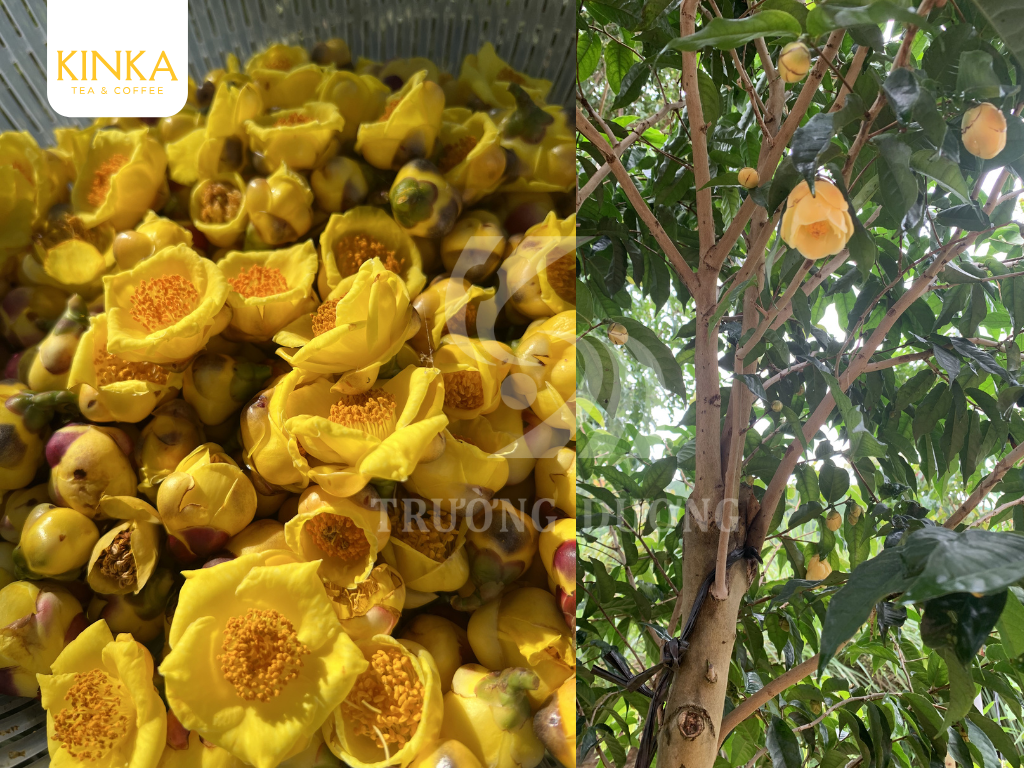
This guide covers everything you need to know about Gia Lai golden camellia tea: where it comes from, how to identify it, what traditional medicine and early research say about its benefits, how to brew it properly, the product lines available, and where to buy it from an authorized source.
Important note: The information on benefits in this article is drawn from traditional medicine and early-stage scientific research, and is intended for general knowledge only. KINKA golden camellia tea is a regular food product, not a drug, and is not intended to replace medical treatment. If you have an existing health condition, are pregnant, or are breastfeeding, please consult a doctor before using it regularly.
What Is Golden Camellia Tea?
Golden camellia tea comes from plants in the genus Camellia — the same genus as the common tea plant (Camellia sinensis) and part of the Theaceae (tea) family. What sets it apart is its flower: a distinctive golden-yellow, waxy-petaled bloom, quite different from the white flowers of ordinary tea plants. In English-language sources, the group of tea species with these golden blossoms is often referred to broadly as “golden camellia” and sometimes linked to the scientific name Camellia chrysantha; a few sources associate the specific varietal cultivated in Gia Lai with Camellia flava.
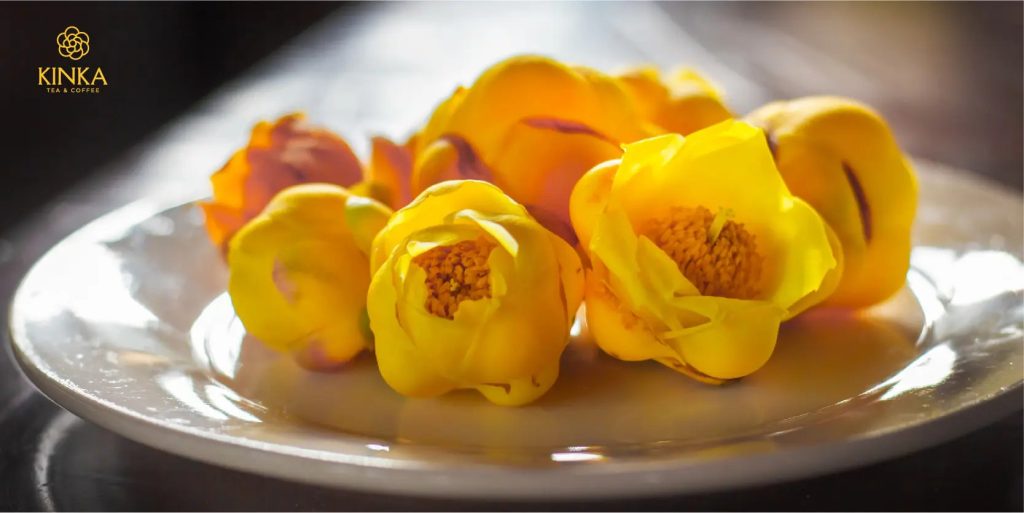
A few identifying characteristics of golden camellia:
- Bright golden-yellow to gold-tinted flowers with thick, waxy, layered petals that typically bloom in winter and early spring.
- Dark green, glossy leaves with finely serrated edges and visible veins.
- A small tree or shrub that favors cool, humid climates and often grows in the understory of forests.
- The flower buds and young leaves are the parts used to make tea, either loose-dried or as tea bags.
Because golden camellia has such demanding growing requirements — climate, soil, and elevation all need to align — and natural yields are limited, it has long been classified as a rare and valuable medicinal plant, commanding a higher price than ordinary tea.
Gia Lai Golden Camellia Tea — What Makes the Growing Region Different
The value of Gia Lai golden camellia tea comes from the growing region itself, not from any borrowed reputation. Starting in 2017, Truong Duong Group and Tam Phuc Minh selected land around the extinct Chu Dang Ya volcano and the Bien Ho (Sea Lake) area in Gia Lai province — at an elevation of 600 to 800 meters (roughly 2,000-2,600 feet), with mineral-rich red basalt soil and a cool climate year-round — to build a dedicated golden camellia growing region. That work laid the foundation for what would later become the KINKA-branded tea.
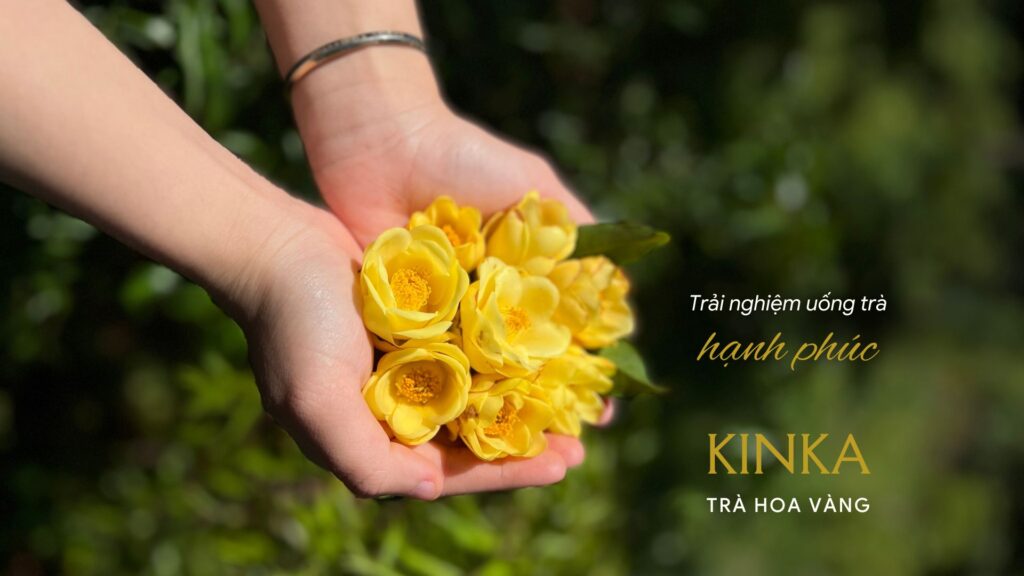
What makes the cultivation model here different is a “forest first, tea second” philosophy: rather than planting on cleared land, the project team restored native forest ecosystems first, planting indigenous timber trees to create natural shade cover, and only then introduced wild golden camellia varietals to grow alongside the forest understory. The tea plants are irrigated entirely with natural groundwater, without synthetic fertilizer or pesticides. Beyond producing clean raw material, the model has also created stable local employment for ethnic minority communities in the area.
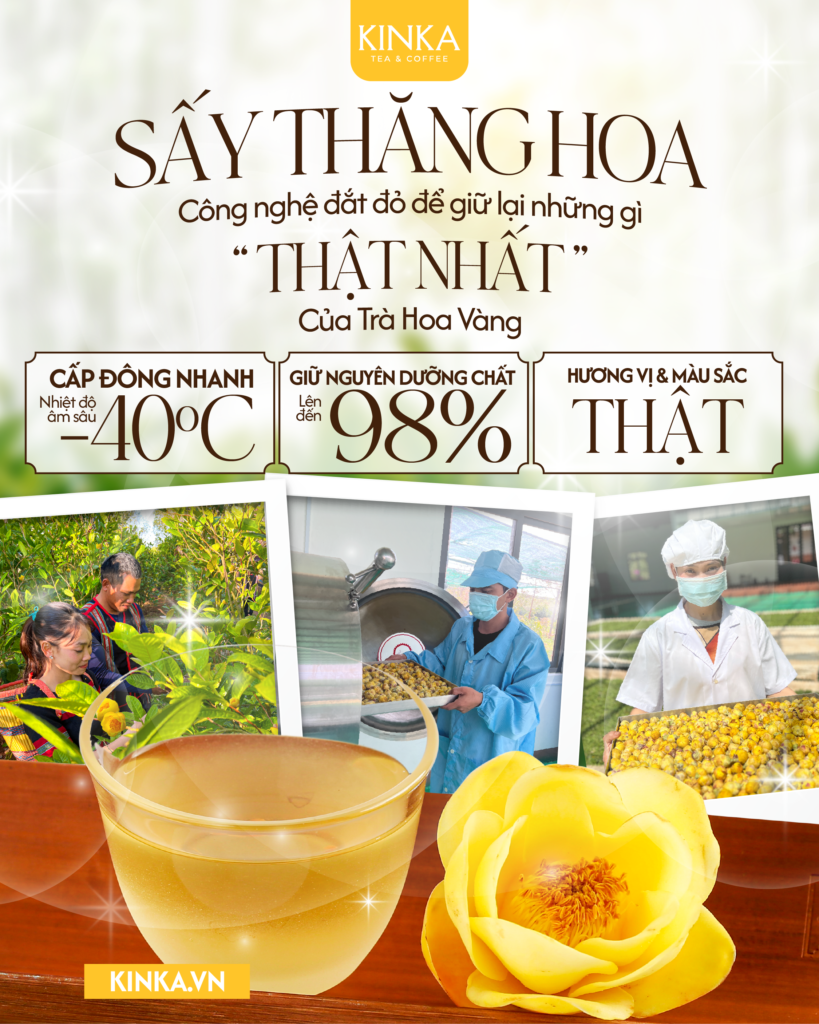
On the processing side, to avoid the nutrient loss common with conventional heat-drying methods, the growing region invests in freeze-drying technology at -40°C (-40°F), which preserves the natural shape and flavor of the tea buds and retains an estimated 95-98% of their nutrient content. The quality and active-compound levels of KINKA golden camellia tea have also been examined through research collaborations with the University of Medicine and Pharmacy at Ho Chi Minh City.
Thanks to this attention across the full value chain, Gia Lai golden camellia tea earned Vietnam’s OCOP 4-star certification in 2023, becoming a flagship product of the province. In 2024, KINKA was also named among Vietnam’s Top 10 National Brands.
9 Benefits of Golden Camellia Tea, According to Traditional Medicine and Early Research
According to traditional medicine sources and some early-stage scientific studies, golden camellia contains a range of notable compounds — saponins, polyphenols, flavonoids, polysaccharides, trace minerals (selenium, germanium, zinc, manganese), and vitamins C and E. Below are 9 benefits commonly associated with this herb:
- May support antioxidant activity and slow visible signs of aging: High polyphenol and flavonoid content is noted for its ability to help neutralize free radicals in the body.
- May support cardiovascular health: Traditional medicine and some early research suggest the polysaccharides and polyphenols in golden camellia may help support healthy cholesterol levels and circulation.
- May help support healthy blood sugar levels: The tea’s antioxidant compounds are traditionally believed to support the body’s sugar metabolism.
- May support liver function: The high flavonoid content is thought to help support the liver’s natural detoxification process.
- May help ease stress and support better sleep: Golden camellia tea is naturally caffeine-free, making it suitable to enjoy in the evening without affecting sleep.
- May help support immune function: The trace minerals and vitamins in the tea are considered generally beneficial for overall immune resilience.
- May support weight management: As part of a healthy diet, some people include golden camellia tea in their routine to support body composition goals.
- May support skin health: Golden camellia’s strong antioxidant properties are popularly used to support skin care from the inside out.
- A natural source of trace minerals: Golden camellia tea contains selenium, germanium, manganese, and zinc — trace elements the body needs in small but important amounts.
Note: These are general points drawn from traditional medicine and reference sources, intended to support everyday wellness and general nutrition — not a treatment claim evaluated by any health authority. KINKA golden camellia tea does not replace medical treatment and should not be used to self-treat any medical condition.
How to Brew Golden Camellia Tea for the Best Flavor
To get the full flavor and nutrient benefit from golden camellia tea, here’s a basic brewing method:
- Preparation: For a small 200-250ml (7-8.5 fl oz) teapot, use 1-2 dried tea flowers (add a tea bag if you’d like a stronger color/flavor). For a larger infuser to sip from throughout the day, increase to 3-5 flowers plus 2-3 tea bags.
- Water temperature: Use hot water around 85-95°C (185-203°F). Avoid pouring boiling water (100°C/212°F) directly onto the tea, as it can reduce nutrient content and make the tea taste more bitter.
- Steeping time: Let it steep for 10-15 minutes so the flowers fully open and release their nutrients and flavor into the water. With a larger infuser, you can top up with more water throughout the day until the flavor fades.
- Best time to drink: Morning, or about 30 minutes after a meal, tends to work well; avoid drinking on an empty stomach or brewing it too strong.
- Re-steeping: With a small teapot, the same tea can typically be re-steeped 2-3 times throughout the day.
- Storage: Keep the tea in a sealed container or bag, in a cool, dry place away from direct sunlight, to preserve its flavor and nutrients over time.
Pregnant or breastfeeding women, young children, and anyone taking medication for an existing condition should consult a doctor before drinking golden camellia tea regularly.
KINKA’s Golden Camellia Tea Product Lines
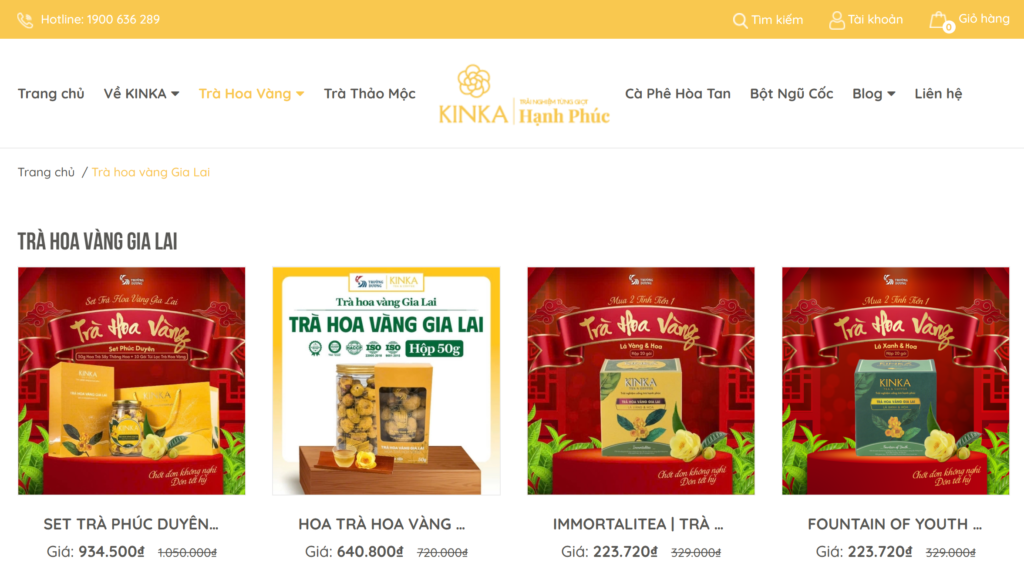
KINKA currently offers Gia Lai golden camellia tea in convenient tea bag format — easy to brew, easy to carry, and suitable for both everyday use and as a gift. Beyond golden camellia, KINKA’s broader herbal tea range includes artichoke, chrysanthemum, gymnema (dây thìa canh), lotus heart and ampelopsis (chè dây) teas.
Where to Buy Authentic KINKA Golden Camellia Tea?
Pricing for golden camellia tea generally depends on the growing origin, the age of the plants, the ratio of flower buds to leaves, packaging format, and sales channel — and it can vary fairly widely and change over time with promotions. For an accurate, up-to-date price, check directly with KINKA’s official sales channels or contact the hotline for a quote.
Frequently Asked Questions
Does golden camellia tea have any side effects?
→ For healthy adults using it at the recommended amount, golden camellia tea is generally considered mild and well-tolerated. That said, individual reactions vary — if you notice anything unusual after drinking it, stop use and consult a doctor.
Who should be cautious about drinking golden camellia tea?
→ Pregnant or breastfeeding women, young children, people managing an existing health condition, or anyone on prescription medication should check with a doctor before making it a regular habit.
How is Gia Lai golden camellia tea different from Ba Che or Ninh Binh golden camellia tea?
→ The main differences come down to soil, climate, and cultivation practices in each region. KINKA’s Gia Lai golden camellia is grown at 600-800m elevation on Central Highlands red basalt soil, using a reforestation-first growing model. (See the full comparison in: Gia Lai vs. Ba Che & Ninh Binh: How Vietnam’s Golden Camellia Growing Regions Compare)
Where can I buy authentic KINKA golden camellia tea, and how much does it cost? You can order directly through kinka.vn, KINKA’s official storefronts on Shopee and TikTok Shop, or contact the KINKA hotline for the latest pricing — prices can vary by packaging format and current promotions.
How should golden camellia tea be stored to keep it fresh? Store it in a sealed container or bag, in a cool, dry place away from direct sunlight and humidity, to prevent mold and preserve tea quality.
Conclusion
Gia Lai golden camellia tea is more than a beverage — it’s the result of years spent building a sustainable growing region around the “forest first, tea second” philosophy that Truong Duong Group and Tam Phuc Minh applied to this land. From golden blossoms grown on the red basalt soil of Vietnam’s Central Highlands, KINKA aims to bring consumers a clean, authentic tea with a clear, traceable origin.
Continue reading: Golden Camellia Tea Benefits: 9 Reasons to Try This Rare Vietnamese Tea | Gia Lai vs. Ba Che & Ninh Binh: How Vietnam’s Golden Camellia Growing Regions Compare | How to Brew Golden Camellia Tea: A Step-by-Step Guide | Where to Buy Authentic KINKA Golden Camellia Tea? 2026 Buying Guide
KINKA – Experience Every Drop of Happiness (A brand of Truong Duong Group)
- Website: truongduonggroup.com/en
- Vietnamese storefront: kinka.vn
- Hotline: +84 911 169 318
- TikTok Shop: @kinka.vn
- Shopee – KINKA Tea Shop: shopee.vn/tiemtrakinka


