
 Tiếng Việt
Among herbs studied for blood sugar support worldwide, Gymnema sylvestre (known in Vietnamese as “dây thìa canh”) stands out — not just for its 2,000-plus-year history in Ayurvedic medicine (India), but because it’s backed by a substantial body of modern research, including systematic reviews and human clinical trials confirming how it works.
What Is Gymnema Sylvestre?
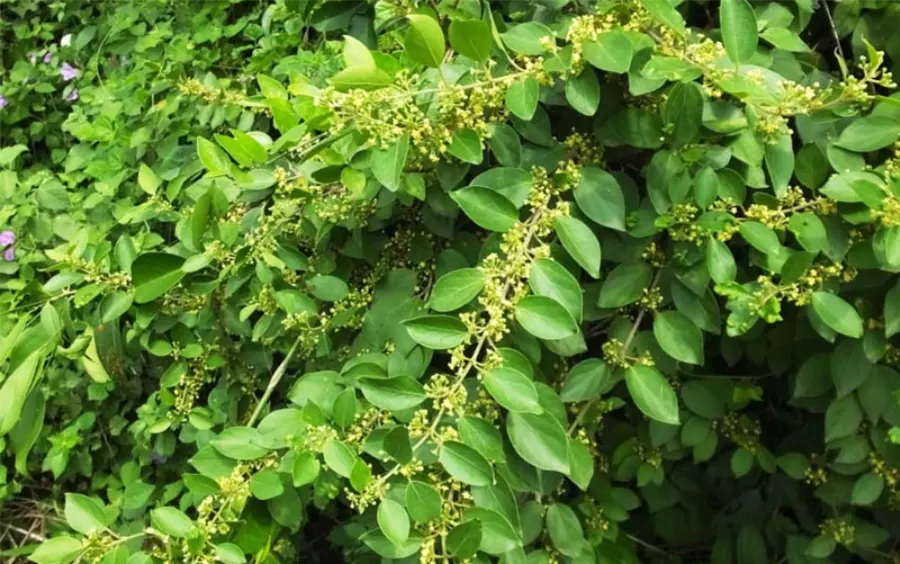
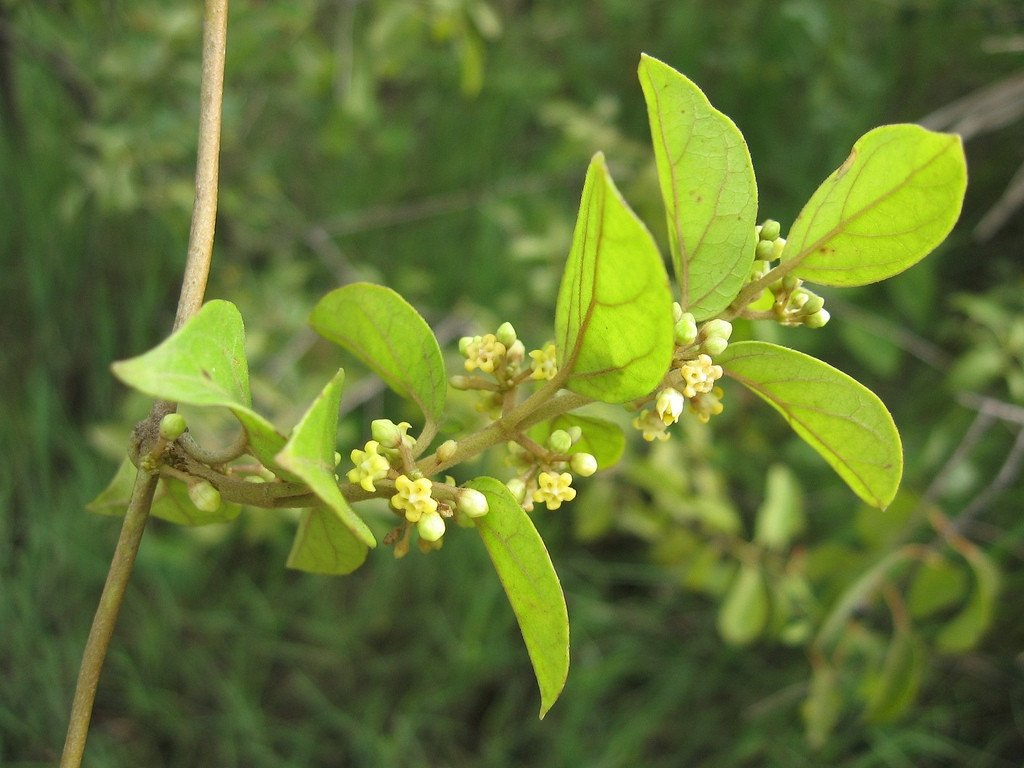
Gymnema sylvestre is a woody vine, typically 6-10 meters long, with milky white sap, oval leaves about 6-7cm long, and small yellow flowers. When ripe, its seed pods split into two halves shaped like a spoon — which is where the Vietnamese name “dây thìa canh” (literally “spoon vine”) comes from. The plant grows wild and is cultivated across many regions of Vietnam, with the leaves and vine typically harvested for use as an herbal remedy.
In Hindi, Gymnema sylvestre is also known as “gurmar” — meaning “sugar destroyer” — a name that comes from a striking property: chewing the fresh leaf temporarily blocks the tongue’s ability to taste sweetness. This unusual effect was actually one of the earliest clues that led scientists to investigate the plant’s impact on the body’s sugar metabolism more closely.
The Key Active Compound: Gymnemic Acid
The most important active compound in Gymnema sylvestre is gymnemic acid — a group of triterpenoid saponins. The plant also contains flavones, anthraquinones, and a peptide called gurmarin. Of these, gymnemic acid is considered the primary compound responsible for its effects on blood sugar.
Three Mechanisms of Action on Blood Sugar
According to herbal pharmacology references, gymnemic acid is documented to act through three pathways:
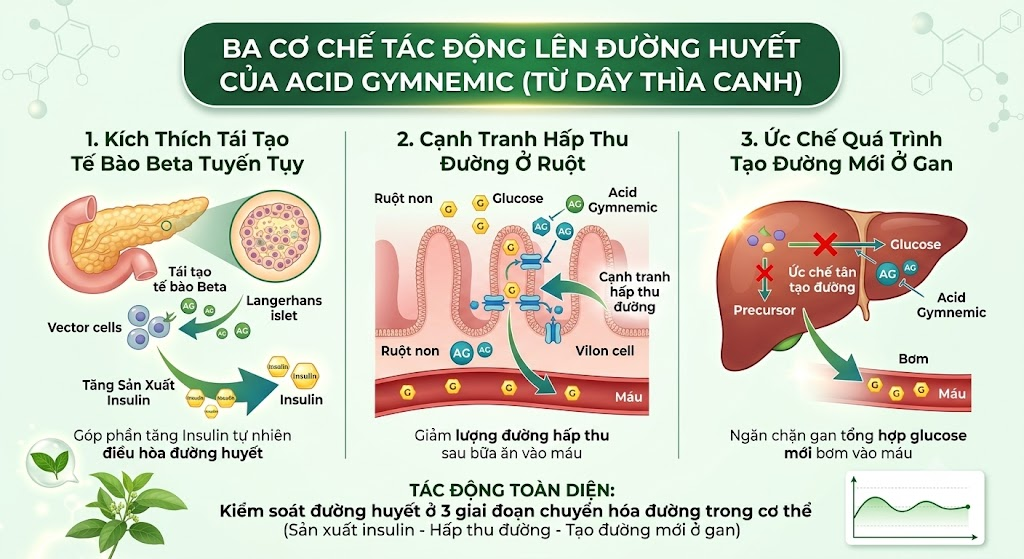
1. Supporting Regeneration of Pancreatic Beta Cells
Beta cells in the pancreatic islets (Islets of Langerhans) are where insulin — the hormone that regulates blood sugar — is produced. Gymnemic acid has been noted to support the regeneration of these cells, potentially helping to boost the body’s natural insulin production.
2. Competing With Sugar Absorption in the Intestine
Because of its molecular structure, which resembles glucose, gymnemic acid is thought to “compete” with sugar molecules for absorption sites in the small intestine, reducing the amount of sugar absorbed into the bloodstream after a meal.
3. Inhibiting New Glucose Production in the Liver
The liver can produce its own glucose through a process called gluconeogenesis. Gymnemic acid has been studied for its potential to help inhibit this process, reducing the extra glucose the liver “pumps” into the bloodstream.
These three mechanisms act at three different stages of the body’s sugar metabolism process (insulin production, sugar absorption, and liver glucose production) — which is why Gymnema sylvestre is considered to have a relatively comprehensive effect on blood sugar compared to many other herbs.
The Scientific Research Behind Gymnema Sylvestre
Gymnema sylvestre is one of the few blood-sugar-support herbs with multiple systematic reviews — a high tier of scientific evidence, since these studies pool results from multiple independent trials:
- A systematic review and meta-analysis published in the journal Phytotherapy Research (Wiley) examined the effect of Gymnema sylvestre supplementation on glycemic control in people with type 2 diabetes.
- “An Evidence-Based Systematic Review of Gymnema” by the Natural Standard Research Collaboration, published in the Journal of Dietary Supplements — one of the more widely cited academic reviews of this herb.
- In Vietnam, domestic researchers have also studied the in vitro (lab-based) hypoglycemic effects of several Gymnema species growing in Vietnam, including Gymnema sylvestre — helping confirm this herb isn’t just studied abroad, but is also of interest to Vietnamese science using homegrown source material.
- The Vietnam Korea Institute of Science and Technology (VKIST), a state research institute, has also classified Gymnema sylvestre as a “promising herb in diabetes treatment” based on accumulated scientific evidence.
How to Use Gymnema Sylvestre According to Herbal References
According to reference materials, one common traditional preparation is decocting about 50g of dried Gymnema sylvestre in 1.5 liters of water for 15 minutes, taken in 3 doses per day, 15-20 minutes after meals. Pre-made tea-bag products offer a much simpler brewing method (just steep in hot water) — specific usage instructions for individual products are covered in the product-specific articles later in this series.
Who Should Use Caution With Gymnema Sylvestre?
- Pregnant or breastfeeding women.
- People with low blood pressure.
- Anyone taking diabetes medication (insulin or oral hypoglycemic drugs) — due to the risk of blood sugar dropping too low when combined, consult a doctor and monitor blood sugar closely.
- Anyone with another underlying condition or on long-term medication.
(See the full dosage and safety guidance in: “How to Use Golden Camellia Tea and Gymnema Sylvestre Safely for Diabetes“)
Frequently Asked Questions
Is Gymnema sylvestre suitable for both type 1 and type 2 diabetes? According to herbal pharmacology references, Gymnema sylvestre has been used for both types. That said, anyone with diabetes should still consult their treating physician before use, since suitability can vary based on individual health status.
How long does it take to see effects from Gymnema sylvestre? There’s no fixed timeframe that applies to everyone, since it depends on individual physiology, diet, and adherence to treatment. It’s best to monitor blood sugar regularly for an objective assessment, rather than expecting results within a specific number of days.
Does Gymnema sylvestre have side effects? According to reference materials, Gymnema sylvestre is generally considered safe at recommended doses, but it can still cause blood sugar to drop too low if combined improperly with diabetes medication. People with low blood pressure or who are pregnant should use caution or avoid it.
Important note: This article summarizes published scientific research for general knowledge and is not medical advice. Gymnema sylvestre is a regular food product, not a drug, and is not a substitute for diabetes treatment. People with diabetes, pregnant women, and people with low blood pressure should consult a doctor before use.
Continue reading: What Herbal Tea Should People With Diabetes Consider? A Science-Based Overview | Is Gia Lai Golden Camellia Tea Good for People With Diabetes? | Why Golden Camellia Tea and Gymnema Sylvestre Work Well Together
KINKA – Experience Every Drop of Happiness (A brand of Truong Duong Group)
- Website: truongduonggroup.com/en
- Vietnamese storefront: kinka.vn
- Hotline: +84 911 169 318
- TikTok Shop: @kinka.vn
- Shopee – KINKA Tea Shop: shopee.vn/tiemtrakinka


