
 Tiếng Việt
If you’ve read about Gia Lai golden camellia tea and Gymnema sylvestre separately, you may be wondering: why are these two herbs so often combined into a single product instead of being used on their own? The answer lies in how each one acts on a different stage of the body’s sugar metabolism process.
A Quick Recap of Each Herb’s Mechanism
Before getting into the combination, here’s a recap of each herb’s strengths, covered in the two previous articles in this series:
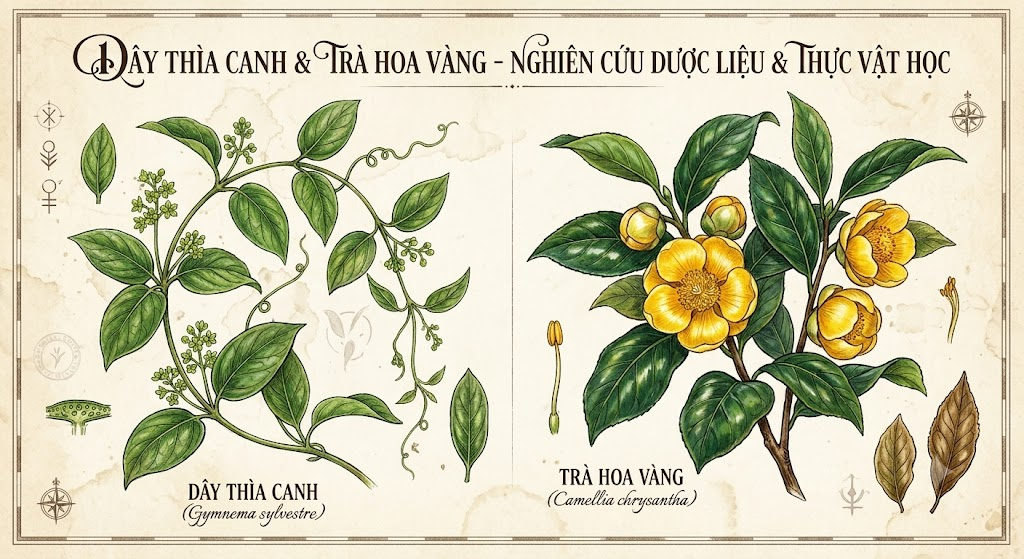
- Gymnema sylvestre: acts primarily on three stages of sugar metabolism — supporting regeneration of pancreatic beta cells (boosting insulin production), competing with sugar absorption in the intestine, and inhibiting new glucose production in the liver. This is a more “direct metabolic” mode of action.
- Gia Lai golden camellia tea (Camellia flava): according to research by Assoc. Prof. Dr. Nguyen Huu Lac Thuy, golden camellia flower extract has shown blood-sugar-lowering effects in experimental models, along with links to reduced degeneration of the Islets of Langerhans and improved insulin resistance. On top of that, golden camellia tea is rich in polyphenols and flavonoids, with antioxidant properties well documented in traditional medicine and reference sources.
Why the Combination Makes Scientific Sense
Looking at each herb’s mechanism, they don’t overlap or compete with each other — they act at different angles. Gymnema sylvestre leans toward directly regulating sugar metabolism (absorption, insulin production, liver glucose output), while golden camellia tea leans toward supporting pancreatic cell protection and antioxidant activity — a meaningful factor, since oxidative stress is considered one of the contributors to gradual beta cell damage in people with diabetes.
From a traditional herbal pharmacology standpoint, combining herbs with different mechanisms that point toward the same health goal (in this case, blood sugar support) is a common approach, with the expectation of a more comprehensive effect than using either herb alone.
What’s Important to Understand Correctly
To be clear: the research cited throughout this series — on golden camellia tea and on Gymnema sylvestre — was conducted on each herb individually. No clinical study has yet specifically measured the effect of a combined product on humans. So this article presents the scientific rationale for combining two herbs with complementary mechanisms — a reasonable, well-founded approach, but not a claim that a combined product has been clinically proven to be “twice as effective.”
That’s also why the language throughout this article stays deliberately cautious (“there’s scientific rationale for combining,” “designed based on complementary mechanisms”) rather than making firm claims about a synergistic effect.
In Practice: Combined Products on the Market
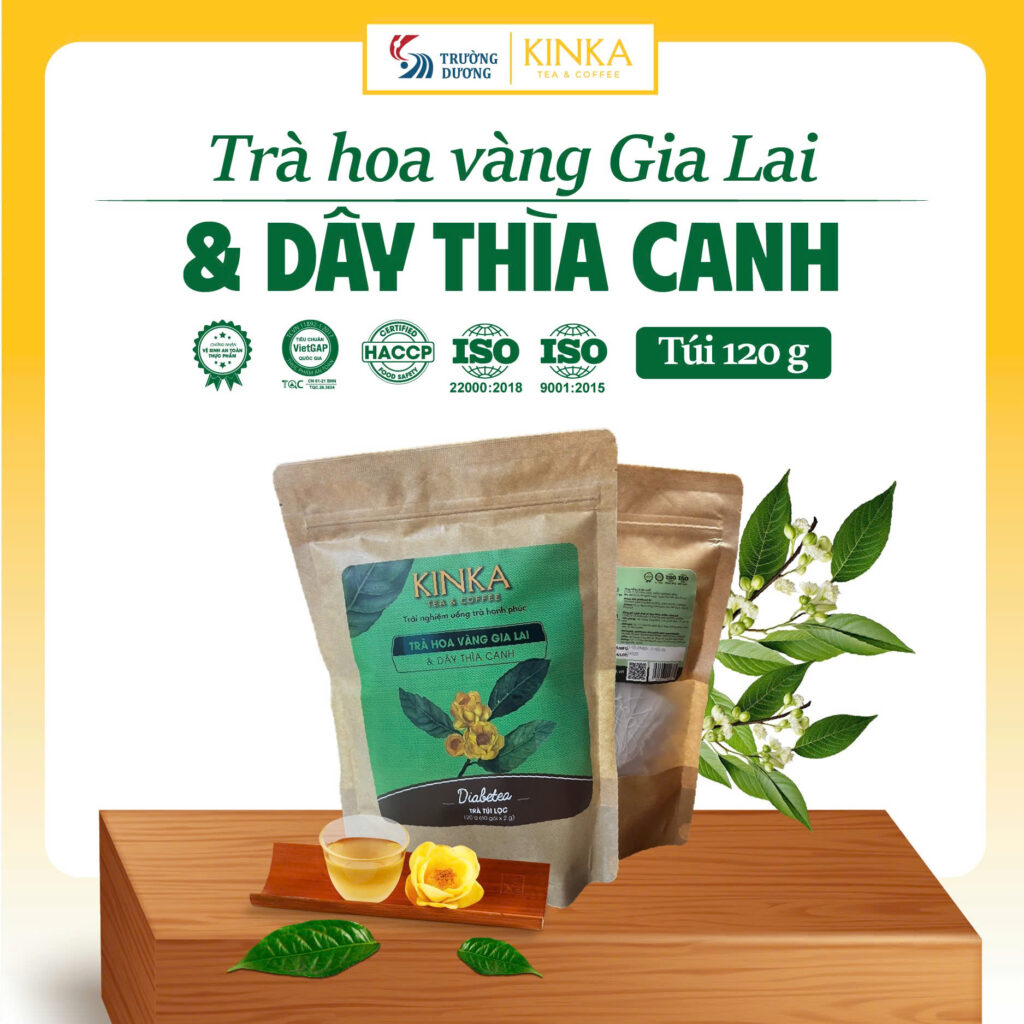
Based on this scientific logic, some herbal tea products on the market — including KINKA’s golden camellia tea and Gymnema sylvestre combination — are blended to take advantage of both herbs’ strengths in a single product, so you don’t have to brew two separate teas to get the benefit of both as part of a daily habit. (Learn more about the product in: “KINKA Diabetea: Golden Camellia Tea & Gymnema Sylvestre — Ingredients, Usage, and Price“)
Is the Combination Right for Everyone?
Not necessarily. Combining two herbs also means combining their precautions — for example, the cautions that apply to Gymnema sylvestre (pregnant/breastfeeding women, people with low blood pressure, people on diabetes medication) still apply to the combined product. If you’re new to either herb and want to test your body’s response to each one individually first, using them separately at first is also a reasonable choice. (See the full comparison in: “Golden Camellia Tea, Gymnema Sylvestre, or Diabetea? A Guide to Choosing What’s Right for You“)
Frequently Asked Questions
Is a combined product more effective than using each herb separately? There’s no clinical study directly comparing the effectiveness of a combined product against using each herb individually. In theory, the combination has scientific rationale because the two herbs act through different mechanisms, but that’s not the same as a claim about a specific level of effectiveness.
Can I blend golden camellia tea and Gymnema sylvestre myself at home? In principle, yes, though you’ll want to pay attention to the ratio to avoid the flavor of one herb overpowering the other. Pre-blended commercial products are typically already balanced for ratio and taste, making them more convenient for daily use.
Does a combined product require a different dosage than using each herb separately? Follow the usage instructions on the specific product’s packaging, since the blend ratio may differ from using the raw ingredients separately. See the full dosage guidance elsewhere in this series for more detail.
Important note: This article shares general knowledge based on the science behind each herb individually, and is not medical advice. Products combining golden camellia tea and Gymnema sylvestre are regular food products, not drugs, and are not a substitute for diabetes treatment. Consult a doctor before use, especially if you’re on diabetes medication.
Continue reading: Is Gia Lai Golden Camellia Tea Good for People With Diabetes? | Gymnema Sylvestre: The Blood-Sugar-Lowering Mechanism Backed by Science | Golden Camellia Tea, Gymnema Sylvestre, or Diabetea? A Guide to Choosing What’s Right for You | KINKA Diabetea: Golden Camellia Tea & Gymnema Sylvestre — Ingredients, Usage, and Price
KINKA – Experience Every Drop of Happiness (A brand of Truong Duong Group)
- Website: truongduonggroup.com/en
- Vietnamese storefront: kinka.vn
- Hotline: +84 911 169 318
- TikTok Shop: @kinka.vn
- Shopee – KINKA Tea Shop: shopee.vn/tiemtrakinka


