
 Tiếng Việt
“Is golden camellia tea good for people with diabetes?” is a question more and more people are searching for, as interest in natural herbal support for health continues to grow. For Gia Lai golden camellia tea specifically, the answer goes beyond folk wisdom — there’s now dedicated scientific research behind it, conducted and published by Assoc. Prof. Dr. Nguyen Huu Lac Thuy, strategic advisor to the Gia Lai Golden Camellia Tea project.
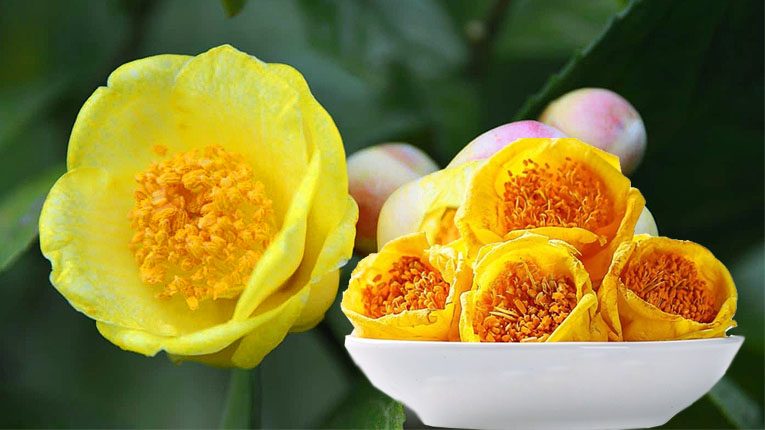
What Is Gia Lai Golden Camellia Tea (Camellia Flava)?
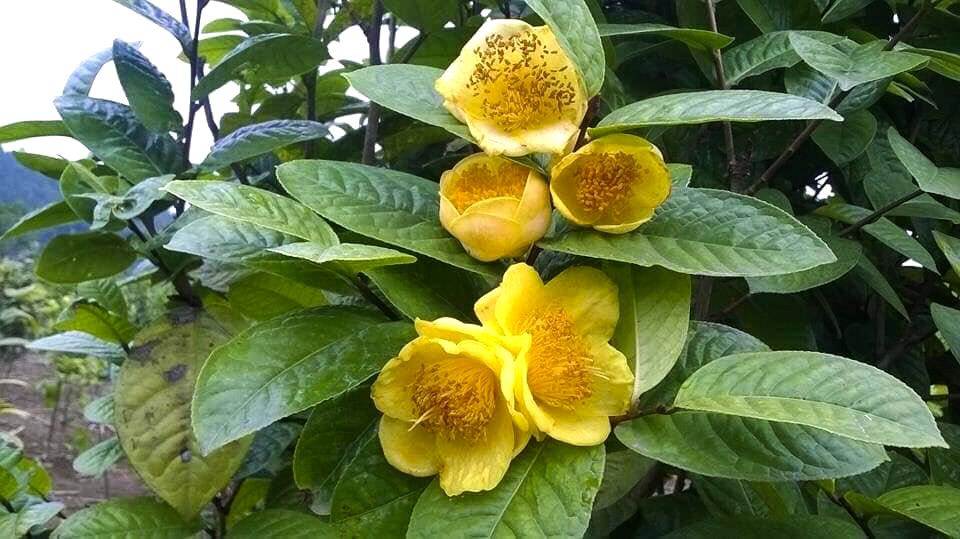
Gia Lai golden camellia tea is made from the flowers of the Camellia flava variety — a species within the golden camellia group (Camellia section Chrysantha) — grown in the Chu Pah district of Gia Lai since 2017 by Truong Duong Group and Tam Phuc Minh. The variety has earned Vietnam’s 4-star OCOP certification and is sold commercially under the KINKA brand.
Two Scientific Studies on Golden Camellia Tea’s Blood-Sugar-Lowering Effects
What’s notable is that research on Camellia flava hasn’t stopped at theory — Assoc. Prof. Dr. Nguyen Huu Lac Thuy and her research team have carried out formal experimental studies, published in both domestic and international scientific journals.
Study 1: Acute Toxicity and Blood-Sugar-Lowering Effects
“Investigating the acute toxicity and evaluating the hypoglycemic effect of golden camellia (Camellia flava) flower extract on an alloxan-induced hyperglycemia model in white mice” — published in the Vietnamese Medical Journal, Vol. 527, Issue 1B (2023), with Assoc. Prof. Dr. Nguyen Huu Lac Thuy as a co-author.
The study used white mice with hyperglycemia induced by alloxan (a chemical commonly used in research to create an experimental diabetes model), then examined how the golden camellia flower extract affected blood sugar levels, while also assessing acute toxicity to confirm the extract’s safety at the tested doses.
Study 2: Effects on Pancreatic Islets and Insulin Resistance
“Effect of Camellia flava (Pitard) Sealy flower extract on the degeneration of Islets of Langerhans and insulin resistance in alloxan-induced hyperglycemia model on Swiss albino mice” — published in the international journal Pharmacia, Vol. 71 (2024).
This study went deeper into the mechanism, examining how the golden camellia flower extract affected the degeneration of the Islets of Langerhans (the insulin-producing region of the pancreas) and insulin resistance in the same alloxan-induced hyperglycemia mouse model — two central mechanisms in the pathology of diabetes.
How Does the Research Explain the Mechanism?
In simple terms, the two studies examined golden camellia tea’s effects from two complementary angles: one looking directly at blood sugar levels, the other digging deeper into whether the extract helps protect pancreatic cells (where insulin is produced) and improve insulin resistance — a meaningful angle, since insulin resistance and declining pancreatic islet function are two central mechanisms in type 2 diabetes.
It’s worth noting these are animal-model (mouse) studies — an important step in herbal research, but not yet human clinical trials. That doesn’t diminish their scientific value, but it does mean the results should be understood at the right level: this is encouraging, early-stage scientific evidence, not a clinically validated conclusion that can replace medical treatment.
Why This Research Is Trustworthy
Unlike much of the word-of-mouth information circulating about herbal tea benefits, these two studies carry all the hallmarks of serious science: conducted by a qualified researcher (Assoc. Prof. Dr. Nguyen Huu Lac Thuy, who teaches at the Department of Analysis and Quality Control, Faculty of Pharmacy, University of Medicine and Pharmacy at Ho Chi Minh City), using a defined experimental model, assessing safety (toxicity) alongside efficacy, and published in peer-reviewed journals (the Vietnamese Medical Journal and Pharmacia) — not just a marketing article claiming to be “backed by scientific research.”
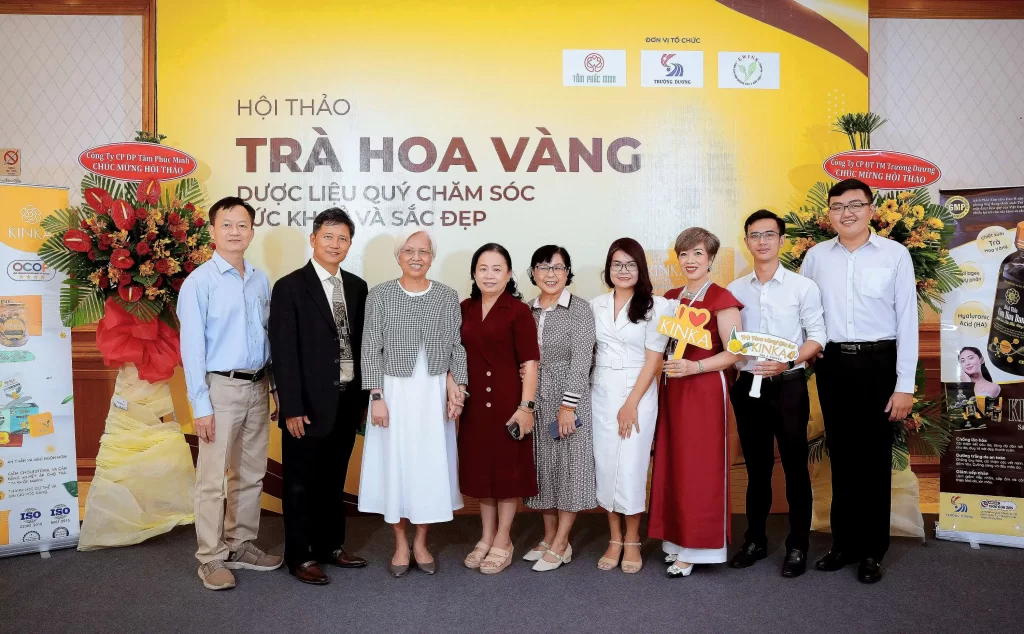
She also leads the project’s golden camellia tea research team — a role publicly confirmed by Truong Duong Group itself at the “Golden Camellia Tea – A Precious Herb for Health and Beauty” workshop (held January 13, 2024, co-organized by Truong Duong Group and Tam Phuc Minh), where she spoke alongside Assoc. Prof. Dr. Nguyen Thi Bay (Chairwoman, Ho Chi Minh City Association of Combined Traditional and Modern Medicine) and Dr. Mai Huynh Nhu.
Golden Camellia Tea Does Not Replace Diabetes Medication
Despite this research foundation, golden camellia tea remains a regular food product, not a drug. People with diabetes should continue following their doctor’s treatment plan and monitoring their blood sugar regularly. If you’re considering golden camellia tea as a daily supportive drink, talk to your doctor first — especially if you’re on diabetes medication, to avoid the risk of your blood sugar dropping too low when combined.
Frequently Asked Questions
Has golden camellia tea been tested on humans? The two studies referenced above were conducted in an experimental mouse model, not yet in human clinical trials. This is credible, early-stage scientific evidence, but it should be understood at that level — not treated as a clinically validated medical conclusion.
Who is Assoc. Prof. Dr. Nguyen Huu Lac Thuy? She holds the rank of Associate Professor and a PhD, currently teaches at the Department of Analysis and Quality Control, Faculty of Pharmacy, University of Medicine and Pharmacy at Ho Chi Minh City, and serves as strategic advisor to the Gia Lai Golden Camellia Tea project, where she leads its research team. She was appointed Associate Professor in December 2025 and has published multiple scientific studies on golden camellia tea (Camellia flava), including international papers.
How much golden camellia tea should someone with diabetes drink? There’s no single “standard” dose that fits everyone, especially for people with an existing health condition. Anyone with diabetes should consult a doctor before regular use, start with a small amount, and monitor their blood sugar to see how their body responds.
Important note: This article summarizes published scientific research for general knowledge and is not medical advice. Golden camellia tea is a regular food product, not a drug, and is not a substitute for diabetes treatment. Anyone managing diabetes should follow their doctor’s treatment plan and consult a healthcare professional before regular use.
Continue reading: What Herbal Tea Should People With Diabetes Consider? A Science-Based Overview | Gymnema Sylvestre: The Blood-Sugar-Lowering Mechanism Backed by Science | Golden Camellia Tea Benefits: 9 Reasons to Try This Rare Vietnamese Tea
KINKA – Experience Every Drop of Happiness (A brand of Truong Duong Group)
- Website: truongduonggroup.com/en
- Vietnamese storefront: kinka.vn
- Hotline: +84 911 169 318
- TikTok Shop: @kinka.vn
- Shopee – KINKA Tea Shop: shopee.vn/tiemtrakinka


